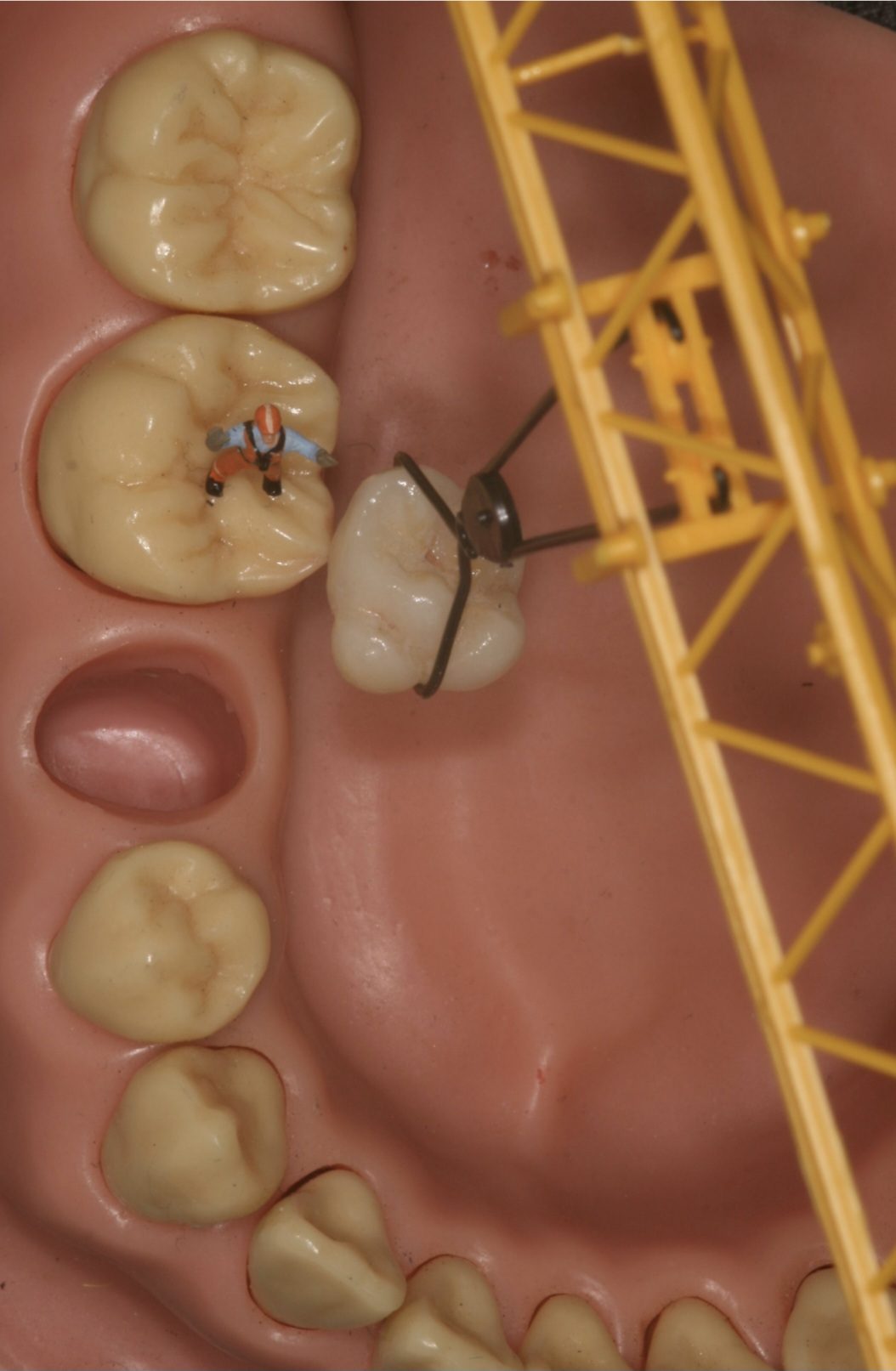
If you’ve been told you need a root canal, there’s a reasonable chance you walked out of that appointment without a clear picture of what the treatment actually involves. Patients often arrive in my chair knowing only that something is wrong with the tooth, that the procedure has a fearsome reputation, and that it’s going to take a while. Beyond that, the picture is hazy.
I want to fix that, because I think most of the worry around root canal treatment comes from not understanding what it is. Once you do, the treatment looks a lot more rational. So this piece is a plain-English explainer — what’s happening inside a tooth that needs a root canal, what we’re trying to achieve when we treat it, what causes it in the first place, and what you can do to reduce the chances of ever needing one.
To understand a root canal, you need to know one thing about how a tooth is built. From the outside, a tooth looks solid — enamel on the outer surface, then a slightly softer layer called dentine underneath. But running down the middle of every tooth is a hollow space. That space contains the pulp — a bundle of nerve and blood vessel tissue that runs from the crown of the tooth (the bit you can see in your mouth) down through one or more narrow channels inside each root, all the way to the tip.
Those channels are the root canals. They aren’t unusual or rare. Every tooth has them. They’re how the nerve and blood supply gets into the tooth in the first place, and they’re a normal, healthy part of the tooth’s structure when everything is going well.
The problem we’re treating is what happens when that internal space gets infected.
Bacteria, when they get inside the pulp of a tooth, do exactly what bacteria do — they multiply, they feed, and they produce waste products. The pulp tissue, which until that point was healthy nerve and blood vessel, gets infected. Your body responds with inflammation, exactly as it would to any other infection. The pulp becomes inflamed, then — if it goes on long enough — it dies.
That sequence is what produces the symptoms most people associate with needing a root canal. Lingering sensitivity to hot or cold. Pain that wakes you up at night. A dull throbbing ache that won’t go away. A specific tooth that hurts when you bite on it. Eventually, sometimes, a visible swelling around the tooth as the infection spreads beyond the root tip into the bone of your jaw.
The reason this happens is that, once bacteria are inside the pulp, you can’t get rid of them by ordinary means. Antibiotics can’t really reach the inside of the tooth properly — the pulp doesn’t have the blood supply for that — and your immune system can’t clear it on its own either. The infection sits inside the tooth and keeps inflammation going, sometimes flaring up acutely, sometimes grumbling along chronically for years.
There are essentially three ways for bacteria to reach the inside of a tooth.
The first and most common is deep decay. A cavity that’s been left untreated for long enough will eventually burrow through the enamel and the dentine and reach the pulp. At that point the bacteria from the cavity have a direct pathway into the nerve. This is by far the most frequent reason I see for needing a root canal, and it’s why prevention and early treatment of cavities matters so much.
The second is trauma. A sharp blow to a tooth — a sports injury, a fall, a car accident — can damage the pulp tissue directly. Sometimes the damage shows up immediately. Sometimes the tooth dies quietly over months or years before symptoms appear. Patients are often surprised to discover they need a root canal on a tooth they injured years ago and had forgotten about.
The third is cracks in teeth. Cracks create microscopic pathways from the outside of the tooth into the pulp. They’re often invisible to the naked eye and can be very difficult to spot, but they let bacteria in just as effectively as a cavity does. Cracks are particularly common in patients who clench or grind their teeth, and in teeth that have already had large old fillings that have weakened the structure.
Any of these — decay, trauma, cracks — gives bacteria a route in. Once they’re in, you need root canal treatment.
Now we can get to what the procedure itself involves, which is, when you understand the problem, surprisingly logical.
The infection is inside the tooth, in the root canals. We can’t reach those canals to clean them out unless we open the top of the tooth to access them. So step one is to make a small opening in the top of the tooth that gives us access down into the canals.
Step two is to clean the canals. This is the heart of the procedure, and it’s the part that matters most for whether the treatment will succeed. We use very fine instruments to carefully shape and widen the canals into smooth tubes — wide enough that we can disinfect them properly, but not so wide that we weaken the structure of the tooth. While we’re doing that, we’re constantly irrigating the canals with antibacterial solutions, agitating those solutions so that they reach every corner, every offshoot, every tiny side branch. The aim is to reduce the bacterial load inside the tooth as close to zero as we can.
Step three is to seal the canals. Once they’re clean, we fill them from top to bottom with a material that completely fills the space and prevents bacteria from getting back in. Then we seal the access opening at the top with a high-quality restoration — at BDS, that’s typically a crown or onlay placed by Ian or Ellie afterwards, and that final restoration is critically important. A perfectly cleaned and sealed root canal that isn’t properly restored on top will eventually fail, because new bacteria will leak back in.
That’s the entire procedure. Open the tooth. Clean the canals. Seal them. Restore the top properly. Each step matters, and each step has techniques and technology behind it that have improved enormously in the last decade or two — but I’ll go into that in a later article in this series.
For a routine primary root canal — meaning the first time the tooth has had treatment — the procedure usually takes around an hour and a half. Some teeth, particularly those that are heavily infected, require a two-visit approach: we open the tooth and clean it on the first visit, place a dressing inside that continues to disinfect over a couple of weeks, then come back and complete the treatment. That’s not a failure of the treatment — sometimes it’s the right way to handle a stubborn case.
There are cases where treatment takes longer, particularly very complex anatomy or retreatments of root canals that have been done before. We’d discuss that with you in advance so you know what to expect.
The honest answer to can root canals be avoided is: often, yes. Not always — trauma is largely unavoidable, for instance — but for the majority of the cases I see, there are things the patient could have done that would have meant the bacteria never reached the pulp in the first place.
The headlines are familiar, but they’re worth repeating because they matter:
Good oral hygiene. Twice-daily brushing with fluoride toothpaste, and — this is the one most people are missing — interdental cleaning every day. The places that decay starts most often are between the teeth, which a toothbrush can’t reach. My partner Ian has written about this in his own blog series here, in the piece on the Five Fs of dentistry, and I’d suggest reading it if you haven’t.
Diet, and particularly sugar frequency. It’s less about the total amount of sugar in your diet and more about how often your teeth are exposed to it. Sip a sugary drink slowly over an hour and your teeth get a much longer acid attack than if you have the same drink in one go.
Manage clenching and grinding. If you grind your teeth at night, especially, you’re significantly more likely to develop cracks over time. A night guard is a relatively inexpensive intervention compared to the root canal it may prevent.
Catch problems early. Regular check-ups exist for a reason. Decay caught at the enamel stage often doesn’t need any drilling at all — just better hygiene and a six-month review. Decay caught after it has reached the pulp needs a root canal. The earlier we see what’s happening in your mouth, the less invasive the response can be.
If you’ve found this article because you’re currently in toothache and you suspect you might need a root canal, two things.
First, see a dentist promptly. Toothache that’s keeping you awake at night, or that’s reliably worse with hot or cold, is your tooth telling you something is wrong inside. Earlier intervention almost always means a simpler outcome.
Second, please don’t dread the appointment more than you need to. Modern root canal treatment, done well, is genuinely comfortable. We can almost always get you out of pain at the first visit, even if the full treatment takes longer than that. The next article in this series is entirely about what you’ll actually experience as a patient — and I think you’ll find it considerably more reassuring than what you’ve been bracing yourself for.
Dr Daniel Rabinowitz is an associate dentist at BDS Dental with a special interest in endodontics. To book a consultation or get out of pain promptly, contact the practice here.
Our reception team is happy to help with bookings, treatment enquiries, and new patient registrations. Get in touch today and we will find a time that works for you.
We have more than 100 five-star Google reviews from patients across Golders Green, Hampstead, and North London. Read what they have to say, or book an appointment to experience the care for yourself.
I've been going here for over 40 years so I think I'm well placed to give an honest review. From the minute you walk in, you're greeted in reception by Eli Sheva or Bridget. They are both courteous a... Read More
As always Ian was fantastic his kindness and professionalism makes it a pleasure to attend the Surgery. I am grateful to have such an incredible Dentist.
I am a patient of Dr Nina Kosarevic - she is a fantastic dentist and aesthetic medicine clinician. I have recently started seeing her for concerns regarding forehead lines and we discussed options in ... Read More
I had the pleasure of seeing Nina today at Bergin Davis Sidelsky Dental Practice. She is incredibly professional and attentive to detail — she simply wouldn’t let me leave until she had thoroughly... Read More
I travelled from East London to Golders Green as I was informed by multiple people that Dr Nina is a brilliant dentist. I had a chipped tooth and at 7 months pregnant my options were limited. Dr Nina ... Read More