
Blogs
Why We Sometimes Don’t Fill the Hole on Your X-Ray
10 July 2026
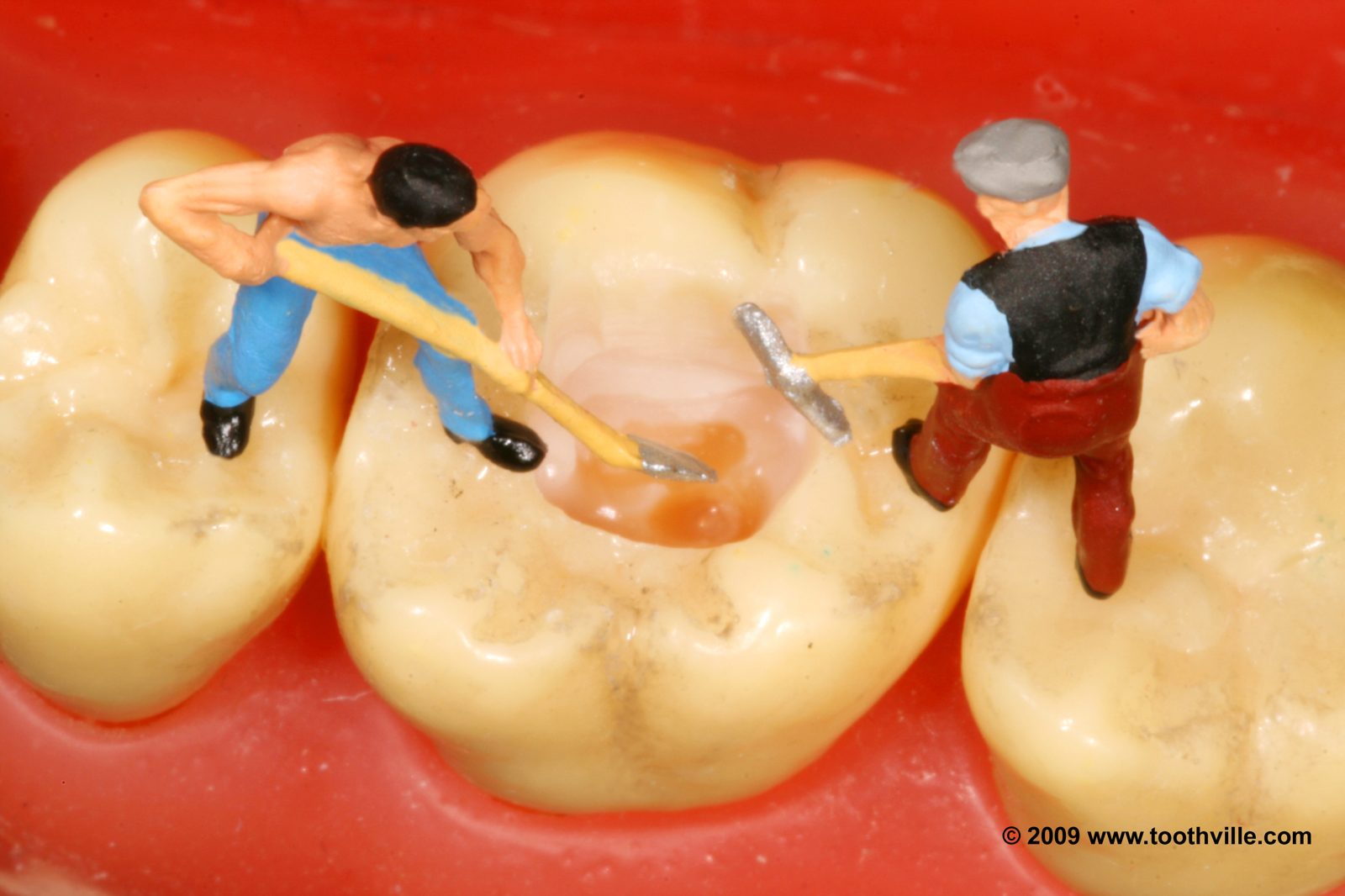
If you’ve ever sat in a dental chair and been told you have ten holes that need filling — or you know someone who has — you’ll probably find what I’m about to say a little strange. Quite often, when I look at the same patient and the same x-rays, I’ll come to a different conclusion: that maybe two or three of those holes need treatment right now, and sometimes none of them do.
That isn’t because I’m an outlier, or because I’m being lazy. It’s because the evidence on tooth decay has moved on a long way over the last thirty years, and so has the way we choose when to intervene. This is the second piece in my series on minimally invasive dentistry at BDS Dental, and it’s about the part of the approach that, to my mind, matters most: the decision not to drill.
The old rule was simple — and often wrong
Going back thirty years or so, the standard approach to a hole on an x-ray was straightforward: if in doubt, drill it out. That thinking was already becoming outdated when I trained early on, but it was still how many dentists my age were trained. The thinking behind it wasn’t unreasonable. Decay is a destructive disease process — bacteria in the mouth feed on sugar, turn it into acid, and burrow into the teeth, effectively infecting them. Antibiotics can’t reach inside a tooth. The thinking was that the only way to deal with it was to remove it physically.
The problem is what getting at a small lesion actually involves. A lot of decay happens in between the teeth, where you can’t see it from the outside — it only shows up on x-ray. To reach it, we have to drill down through the biting surface of an otherwise healthy tooth. If we catch a lesion very early and react by drilling it out, 80 to 90 per cent of what comes out can be healthy tooth structure. Even if the dentist does an exquisite job, that’s healthy tooth gone forever.
The first line of the Hippocratic oath is first do no harm. Drilling away large amounts of healthy tooth to chase very small lesions is, on any honest reading, doing harm. So the question becomes: do we always have to?
What we now know about decay
The answer, for many small lesions, is no. We’ve learned that decay can be slowed down, in many cases stopped completely, and in some cases — given time, hygiene, and a sensible diet — even reversed.
To understand why, it helps to know what decay actually looks like as it progresses. A healthy tooth is glassy: strong, intact, very resistant to damage. Early in the process, decay turns that glassy structure into a chalky one — weakened, but still firm. From chalky, it can progress to leathery, and from leathery to a soft, cheesy, mushy structure. Once it’s reached the mushy stage, the bacteria have taken over and there’s no choice — that has to come out.
But many of the lesions I see on x-rays are still in the chalky or leathery stage. We don’t necessarily have to fill those. With the right care, they can be arrested — meaning they stop progressing — and in some cases the tooth can re-mineralise over time. There’s good, well-established clinical evidence behind all of this; it isn’t a fringe idea.
What “monitoring” actually involves
When I tell a patient we’re going to watch a small lesion rather than fill it, that’s not the same as ignoring it. It’s an active process, and it has several parts.
First, we put a proper hygiene programme in place. That means working with our hygienist, and the patient working on their own daily cleaning at home. Second, we look at diet — specifically sugar — what’s actually feeding the bacteria, when, and how often. Third, we look at how the patient is brushing, whether they’re using interdental cleaning, and whether they’re getting enough fluoride to support their teeth.
Then we set an appropriate recall interval and bring the patient back for a fresh look and usually new x-rays. The thing we know for certain is that lesions that aren’t getting bigger on x-ray over time are either inactive, or are progressing so slowly that we can keep monitoring them safely. I have patients I’ve been seeing since they were small children, now grown adults, where I’ve been watching the same small lesions on the same teeth for fifteen years and longer. They haven’t grown. Thirty years ago, I’d have been trained to fill those teeth on the first visit. They’re still intact.
Caries-affected vs caries-infected — and why it matters when we do drill
Even when we do decide that treatment is needed, minimally invasive thinking changes how we approach the actual drilling.
The modern terminology distinguishes between caries-affected dentine and caries-infected dentine. Caries-infected dentine is the cheesy, mushy stuff that’s been overrun by bacteria — that absolutely has to come out. Caries-affected dentine is the partially-damaged layer next to it. The older approach was to remove everything that wasn’t pristine. The current approach, supported by the evidence, is that caries-affected dentine — particularly the layer closest to the nerve — can often be left in place.
That matters more than it sounds. By not drilling away the affected layer over the nerve, we substantially reduce the chance that the tooth ends up needing a root canal in the weeks or months that follow. And in some cases now, even when decay has reached the nerve itself, we can use bioactive materials over the inflamed nerve to calm it down and avoid root canal treatment altogether. Twenty years ago, we couldn’t do that.
Why this conversation matters more than the drill
This is what I mean when I say minimally invasive dentistry is, more than anything else, about decision-making.
The reason it matters is the restorative cycle. Once a tooth is drilled, you can’t undrill it. A small filling, in time, tends to become a bigger filling. The bigger filling can become a root canal, then a crown, then a post crown. Eventually, after many years and many appointments, the tooth gets extracted. How long that whole cycle takes depends on the patient and the dentist — between twenty and thirty years if you’re lucky, sometimes as little as four or five if things go badly. Every time we decide not to start that cycle on a small lesion, we’re potentially adding years, possibly decades, to the life of the tooth.
This is also why I’m a bit cautious about how minimally invasive gets used in the dental world. The phrase is on a lot of websites now. The challenge for us dentists is that we’re usually paid to perform active treatments — we’re not paid to spend time and energy talking patients out of having treatment. So the question I’d ask is: when did a dentist who claims that approach last actually spend the appointment talking you out of work? The willingness to have the longer conversation, and to maybe be paid less for it, is the real test.
The partnership that makes it work
Harris, our former principal, used to draw a little equation: dentist + hygienist + patient = health. It’s a simplification, but there’s a lot in it. None of this works if it’s just the dentist deciding. Monitoring a tooth instead of filling it only works if the patient takes the hygiene seriously, comes back when we ask, and is honest about diet. It’s a three-way partnership.
That’s why, when I have this conversation with a new patient, I try to explain both sides of the deal. I’ll look after them whatever they choose to do — that’s the promise. They can decide not to follow my advice, and I’ll still be their dentist. If they come back to me, I’ll pick up the pieces, no judgement. But the flip side is that the predictions I can make about what’s possible for their teeth assume they’re engaging with the plan. If they go eighteen months without a check-up, and a lesion I was monitoring has grown in that time, that changes what we can do.
It’s a two-edged sword. The minimally invasive approach is right for the majority of patients — but not for everyone. If someone tells me they’re not interested in the hygiene side and just want me to fix whatever needs fixing, I’ll be more cautious about leaving things to watch. There are some patients — some I’ve known for fifteen years, who mainly come in when they’re in pain, who rarely see the hygienist and struggle with cleaning — where I’m more likely to recommend filling the tooth rather than monitoring. Why? Because the realistic chance of getting them onto a partnership approach is low, and the lesion is going to grow.
What to ask your dentist
If you take one thing from this piece, let it be this: it is reasonable to ask your dentist which lesions actually need treating now, and which could be monitored. It’s a fair question. A good dentist won’t be offended by it. Sometimes the answer will be that they all need filling — decay does sometimes present that way. But often the answer will be more nuanced than that, and the conversation is worth having.
In the next piece in this series, I’ll move on to the other half of minimally invasive dentistry: what we actually do when treatment is needed, and how bonded composite has changed what’s possible for patients with worn or chipped teeth. It’s the area I do the most of, and it’s the area where I think we can offer patients the biggest difference — clinically, cosmetically, and financially.
Dr Ellie Bergin is a partner at BDS Dental and a clinical teacher at King’s College London. To book a consultation or a second opinion on whether a filling is really needed, contact the practice here.