
Blogs
The Five Fs of Dentistry: A Simple Framework for Looking After Your Teeth
24 August 2026
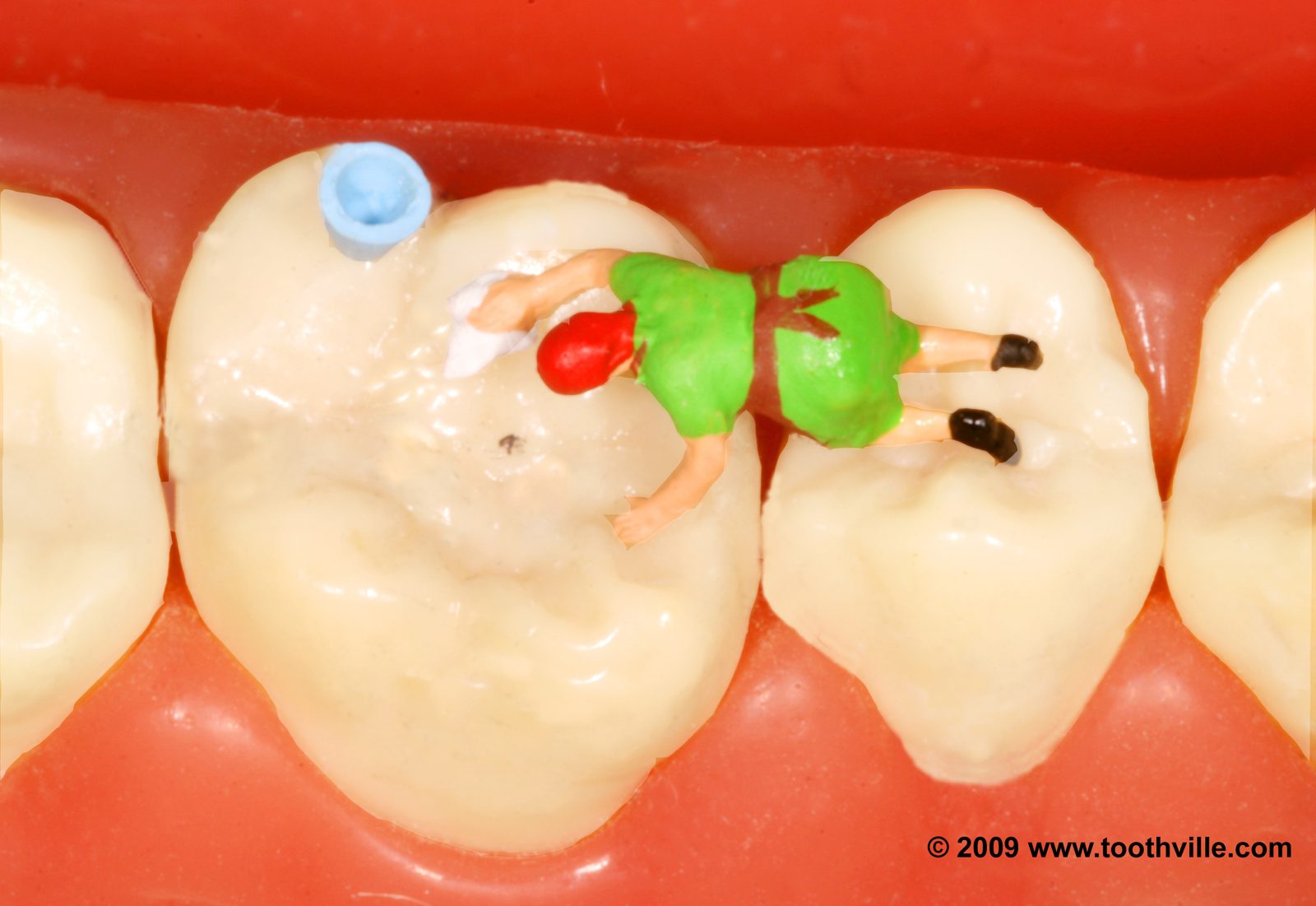
A few years ago, I was asked to come into a radio studio in London and field questions about dentistry on a number of stations through the day — LBC was one of them. It was an interesting morning. To prepare, I tried to come up with the most boiled-down version of what patients actually need to do at home that I could. Something I could give in thirty seconds on air without it sounding either hand-wavy or like a lecture.
What I landed on was the Five Fs of Dentistry. I’m not aware that anyone has stolen it, so I’ll claim it. It’s still the cleanest summary I’ve ever managed of the basics of prevention, and given how much of the rest of this series has been about why we want to do as little dentistry as possible, this piece is about how you make sure you actually need as little as possible.
The five Fs are: Fluoride. Food. Fissure sealants. Floss. And a Friendly dentist.
The first four are clinical. The fifth, I admit, is partly a joke — but only partly, because the friendly dentist matters too, and we’ll get to why.
F1 — Fluoride
Fluoride is the most studied substance in preventive dentistry. It strengthens enamel, helps damaged enamel re-harden, and reduces the rate at which decay progresses. There’s a reason it’s in essentially every mainstream toothpaste in the UK, and there’s a reason public health authorities have spent decades trying to get it more reliably into drinking water.
For most patients, the practical action here is straightforward: brush twice a day with a fluoride toothpaste. That’s the headline. Depending on your individual risk profile — how prone you are to decay, whether you have particular risk factors, what your history has been — there’s more we can do with fluoride beyond that, but we’d have that conversation in the chair, looking at your specific teeth.
F2 — Food
Most patients know sugar is bad for teeth. Fewer patients know what really matters about it.
The thing that drives decay is not so much the amount of sugar in your diet as the frequency with which your teeth are exposed to it. Every time you eat or drink something sugary, the acid-producing bacteria in your mouth get to work for a while afterwards. Your saliva neutralises the acid eventually, but it takes time. If you have one slice of cake with your afternoon tea, your teeth get one acid attack. If you sip a sugary drink slowly over an hour and a half at your desk, your teeth essentially have an acid attack the entire time.
So the practical advice is less about cutting all sugar out of your life — most people aren’t going to do that, and they don’t need to — and more about how you take it. Have sugary things with meals rather than spread across the day. Don’t sip sweet drinks slowly. If you want a treat, have a treat and then drink water afterwards. The frequency is the thing.
This applies to acid as well, by the way — fizzy drinks, citrus, vinaigrettes — for slightly different reasons. My partner Ellie has written about acid erosion in his own blog series here, so I won’t repeat it. But the same principle applies: it’s not just whether you have it, it’s how often.
F3 — Fissure sealants
This is the F that most patients have never heard of, so let me explain it.
The chewing surfaces of your back teeth aren’t smooth. If you ran a tongue over a healthy molar you’d feel grooves and pits — what we call fissures — running across the biting surface. Those grooves are functional, they help your teeth do their chewing job. But they’re also one of the most common places for early decay to start, because food and bacteria collect in them and a toothbrush can’t always reach the bottom of the groove.
A fissure sealant is a thin protective coating we paint into those grooves to seal them, so that food and bacteria can’t accumulate there. It’s a very quick, non-invasive procedure — no drilling, no anaesthetic, no fuss — and it’s particularly valuable for children’s adult molars when they first come through, because that’s the window where prevention is easiest and most impactful. For adults, the conversation about whether sealants make sense depends on how your teeth look, what your decay history has been, and whether you have particularly deep grooves. We’ll go through that at your check-up.
For parents of younger patients reading this: this is one of the most effective single interventions in modern preventive dentistry, and the cost-to-benefit ratio is excellent. It’s worth asking us about.
F4 — Floss (the one most people aren’t doing)
If I had to pick the single biggest gap between what patients should be doing and what they actually do, this is it.
Most people brush. Brushing is good, and most people who brush regularly do a reasonable job of the surfaces a toothbrush can reach. The problem is what a toothbrush can’t reach — the surfaces of your teeth where they sit next to each other. Those surfaces face one another like the spines of two books on a shelf, and the bristles of a toothbrush can’t get in between them properly. Yet in my experience, more decay starts between the teeth than anywhere else.
You can verify this in the chair. When I look at x-rays of patients who brush well but never floss, the picture is often the same: the chewing surfaces and the outer surfaces look healthy, but the bits in between the teeth — the surfaces that share a wall with the neighbouring tooth — are where you see the early lesions.
This is what makes interdental cleaning the genuine game-changer. It accesses a part of your tooth surface that nothing else touches. And here is the slightly inconvenient truth: it’s the bit of oral hygiene that’s the most fiddly, takes a little practice to get good at, and feels like a faff. Which is exactly why most people don’t do it.
The good news is there’s now more than one way to do it. Conventional dental floss is the classic. There are also interdental brushes — tiny, bottle-brush-shaped tools that come in a range of sizes to match the gap between your teeth, and which many patients find easier to use than floss. There are floss holders for people who struggle with the finger technique. And there are water picks, which use a small jet of water to clean between teeth, and which work well for some patients — particularly anyone with bridges, implants, or orthodontic work that makes traditional flossing awkward.
The specific tool matters less than the daily habit. Whichever method you can actually sustain, every day, is the right one for you. We’re happy to walk you through the options at your appointment — and to be honest about which option is best for the shape of your teeth, because not every interdental brush size fits every mouth.
F5 — A Friendly Dentist
When I first put this together for the radio segment, I had to laugh slightly at the fifth F because it isn’t quite the same kind of category as the others. The first four are real, measurable, evidence-based interventions. The fifth one is, on the surface, a bit of a joke.
Except it isn’t, actually.
The reason a friendly, trusted dentist matters is that prevention is a partnership. The four clinical Fs above are things you do at home. But all of them work better when paired with someone who is monitoring your teeth over time, picking up early warning signs that you can’t see, and adjusting the plan to your actual mouth. The early stages of decay are subtle and they show up on x-rays before they show up to you in the mirror. The point of regular check-ups with a dentist you trust is to catch those signs early enough that we can keep treatment to a minimum — and often, that we can avoid treatment entirely.
This is where prevention gets genuinely powerful. Take a young patient whose diet isn’t great, who doesn’t floss, and who shows up with several patches of what we call early enamel decay between their back teeth. Years ago, the standard answer would have been to drill out and fill every one of those areas. Fifteen to twenty small fillings, started young, putting that patient on the slippery slope I described earlier in this series.
But many of those early lesions, if we catch them while they’re still confined to the outer layer of the tooth, can be arrested. I explain the situation, we work on the hygiene routine, we boost the fluoride, we cut the sugar frequency right back, and we re-check on x-ray six or twelve months later. In a good number of cases, what we find is that the lesions haven’t progressed at all. Sometimes the tooth has actually re-mineralised. The whole expedition into fifteen fillings is avoided — and those teeth, instead of starting their lifelong cycle of restorative work at sixteen, are still untouched at forty.
That’s only possible if the patient has a dentist watching over their teeth over time. A friendly dentist, in the way I mean it, isn’t just someone who’s nice to you in the chair — although they should be that too. It’s someone you trust enough to actually come in for the routine appointments, take the advice seriously, and have the honest conversations with about what you’re doing at home. Without that relationship, the rest of the framework is much weaker.
Bringing it together
The honest summary of prevention is this. Brush twice a day with fluoride toothpaste. Keep the frequency of sugar low. Use fissure sealants where appropriate, especially for children. Clean between your teeth every single day, by whatever method works for you. And have a dentist you trust seeing you regularly so the small things stay small.
That’s it. That’s the whole framework. It isn’t complicated. It’s just remarkably underused, and most of the dentistry I do in my chair every week is, in a real sense, the result of one of those five Fs being missing somewhere in a patient’s life.
The next and final piece in this series is the one I most want to write, because it’s the one that I think defines BDS more than any other. It’s about the patients I don’t treat — the cosmetic work I turn down, the second opinions where I tell the patient they don’t need the treatment they’ve been quoted for, and the famous line that there’s a real reputation built by the patients you decline.
Dr Ian Davis is a partner at BDS Dental. To book a check-up or a hygiene appointment to get on top of prevention, contact the practice here.

How much sugar is in your drink?
A can of cola holds almost nine sugar cubes. One popular coffee-shop drink holds fourteen. Dr Ian Davis on the sugar hiding in everyday drinks.